Virtual Library of Newspaper Articles

Woman charged in abandoned baby case
Mira making 'remarkable' recovery
The Toronto Star, PETER EDWARDS AND TANYA TALAGA, STAFF REPORTERS, Tuesday, January 28, 2003
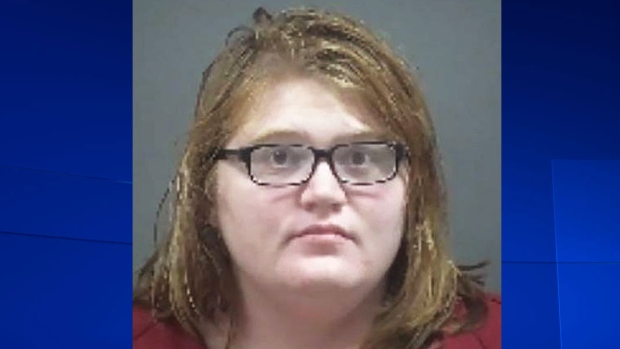
A 41-year-old homeless woman is to appear in College Park court this morning, charged with abandoning a newborn girl on a freezing cold night last week at Nathan Phillips Square.
She faces charges of failure to provide the necessaries of life and child abandonment after a baby, who was just minutes old, was found naked under a blanket on a cement stairwell outside city hall Friday.
Meanwhile, the Children's Aid Society of Toronto will officially seek custody of the infant tomorrow or Thursday. And the case has prompted a call from child and mental health advocates for more community supports.
The baby, who has been named Mira for "Miracle" by aid workers, is in serious but stable condition at the Hospital for Sick Children.
She is making a "remarkable" recovery, said Dr. Andrew James, a neonatologist at the Hospital for Sick Children.
"The feeling of everyone, especially with the nurses, is of such joy because she is doing remarkably well," James said.
"Everyone is delighted."
Mira, who is about a month premature, has gained a couple of ounces since being born at 4 pounds, 9 ounces, said Bruce Rivers, executive director of the Toronto children's aid, yesterday. She's breathing on her own and has been "active, alert, moving, responding and behaving normally," James said, crediting the nurses for their care.
"We have wonderful nurses here who really care for these babies," James said. "They talk to them, hold them, calm them when they are agitated, sometimes they even sing to them."
James said Mira has made a dramatic turnaround from when she arrived at St. Michael's Hospital on Friday night. "She was in desperate straits," James said. Her body temperature was just 28C, 9 degrees below that of a healthy person.
Her heartbeat was low and she needed a mechanical ventilator to help her breathe.
"They did a wonderful job resuscitating her," James said. "They essentially revived her; her heart rate increased from a barely detectable rate to a normal rate. They stabilized her so she could be transferred to our hospital."
James said Mira might be dead if she was found just five or 10 minutes later.
Doctors also haven't seen any clinical signs pointing to brain damage because of lack of oxygen. "This is very reassuring," James said.
Several children have survived prolonged exposure to frigid outdoor temperatures.
Karlee Kosolofski was 2 years old when she was locked out of her family's Saskatchewan home for five hours in minus 22C temperatures. Her heart had dipped to 30 beats per minute by the time paramedics arrived. She lost her left leg but otherwise recovered fully.
Edmonton toddler Erika Nordby was completely frozen her heart had stopped completely and her veins were filled with ice when paramedics arrived. She had wandered into minus 24C weather in the middle of the night and was found by her mother, face down in a snowbank, wearing only a T-shirt and a diaper. She too appeared to recover fully. In the case of Mira, at least 81 families are eager to adopt her if the Children's Aid gains custody, Rivers said.
There were already 50 families on waiting lists to adopt children when Mira was abandoned.
Another 31 families called yesterday with offers to take Mira into their homes, Melanie Persaud of children's aid said.
"What's key is that the family matches Mira's needs, not the other way around," Persaud said.
The agency has received donations of $3,000 for a trust fund to pay for her education, and several stuffed animals.
Rivers was at his own daughter's 13th birthday party on Saturday afternoon when he got a telephone call about the baby.
He said the call moved him and his daughter enormously. He wondered about the troubled circumstances that led to her being left in the cold, just minutes after her birth.
"I think it touches all of us," Rivers said. "I know it touches me.... It causes you to reflect on your own circumstances, to be very thankful."
"No matter how many times you've heard them (stories of troubled children), you're still shocked," Rivers said. "It's not something you or I would understand."
Meanwhile, Councillor Olivia Chow, the city's child advocate, said a recent study estimated at least 300 pregnant homeless women live in Toronto.
"Three hundred kids are born to mothers who are living on the streets each year," Chow said, noting services for these women are woefully inadequate. There is a waiting list for the 90 beds at Robinson House, a shelter for homeless women.
"Surely there's something else we can do," Chow said.
Mental health advocates echoed Chow's sentiments.
"Obviously, somebody homeless, pregnant and living on the street cannot wait for access to services. They need help when they ask," David Kelly, executive director of the Ontario Federation of Community Mental Health and Addictions Programs, told a news conference yesterday.
Between 50 and 80 per cent of hostel users have mental health and addiction issues, noted Steve Lurie from the Toronto branch of the Canadian Mental Health Association.
Kelly told reporters that most of his federation's 216 member agencies have long waiting lists for services. For example, it takes four months just to get assessed for a placement in an addictions program, he noted.
"If the woman had access to supportive housing projects, she may not have been in the cycle where she was living on the street and using shelters," Kelly said.
"Unfortunately, she could probably not access the community mental health and addiction services that she would need to have a normal birth," he added. The federation appeared before the province's finance committee yesterday to plead for a 20 per cent hike, or an extra $120 million, in operating funds. The group argued that an injection of cash makes economic sense.
"The programs can save millions of dollars because they keep people out of hospitals, reducing the number of expensive hospital stays and the pressure on emergency services, such as ambulances, emergency rooms, and the police and corrections," Kelly said.
With files from Theresa Boyle and Karen Palmer